

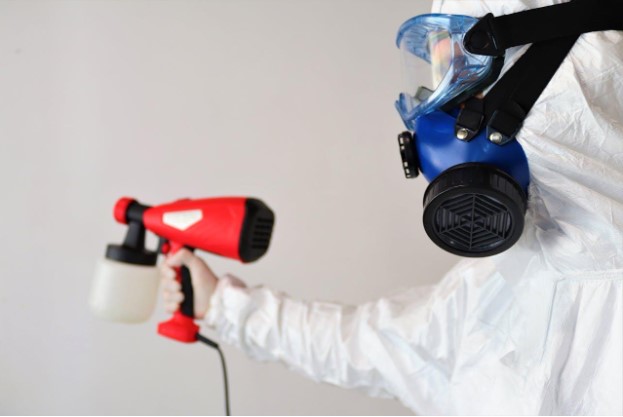
Water damage often leaves behind an unwanted mess that spreads quickly. People frequently wonder what exactly happens when professionals step in to fix the problem. They picture men in hazmat suits tearing down walls. The reality is highly structured and organized.
The process involves precise steps designed to protect your property and health. Experts follow specific protocols to isolate the threat and remove it permanently. Knowing these steps gives property owners peace of mind.
Containing the Area for Mold Remediation and Safety
The very first action professionals take involves stopping the spread. Spores travel through the air easily when disturbed. To prevent this, workers set up thick plastic sheeting around the affected zone. They seal off doorways and vents completely.
During mold remediation they also utilize specialized machines that create negative air pressure inside the containment zone. This pressure difference guarantees that any loose particles get sucked outside rather than drifting into clean rooms. It forms an invisible shield protecting the rest of your home.
Removing Porous Materials like Drywall and Carpet
Some surfaces simply cannot be saved once contaminated. Things like drywall and soft carpets absorb moisture deeply. Once the roots penetrate these porous materials, cleaning the surface achieves nothing. Technicians must cut away the ruined sections entirely.
They carefully remove soiled carpets and damaged baseboards. Workers place these materials into thick disposable bags before carrying them outside. Getting rid of the source material stops future growth in its tracks.
HEPA Vacuuming Every Surface before Cleaning Begins
Dust and loose spores settle everywhere after the tear out phase. Normal vacuums would just blow these microscopic particles right back into the room. Specialists rely on industrial vacuums equipped with High Efficiency Particulate Air filters.
These powerful machines trap the tiniest elements securely inside. Technicians slowly run the vacuum nozzles over every exposed surface. They cover the exposed wood studs and concrete floors. This captures the loose debris hiding in tight corners.
Scrubbing Hard Surfaces with Antimicrobial Solutions
With the loose debris gone, the actual washing commences. Wood framing and concrete walls need intensive cleaning. Workers apply strong antimicrobial liquids directly to these hard surfaces. They use stiff brushes to scrub away stubborn stains and remaining roots.
The chemical solutions penetrate the top layer of the material to destroy any lingering threats. They wipe everything down thoroughly. The framing looks clean and smells fresh once this rigorous scrubbing concludes.
Drying Everything Completely Before Rebuilding
Moisture causes the problem in the first place. Leaving the newly cleaned wood damp guarantees the issue will return. Technicians bring in commercial dehumidifiers and large air movers. These machines run nonstop for several days.
The fans push dry air across the wet studs while the dehumidifiers pull the moisture out of the room. Workers use moisture meters to check the wood daily. They only remove the drying equipment when the structural materials reach perfectly normal moisture levels.
Testing Air Quality Again After the Job Ends
Visual inspections alone cannot prove the space is safe. Spores are invisible to the naked eye. Independent testers arrive to collect air samples from the newly cleaned room. They compare these samples to the air quality outside your property.
The results must show that the indoor air is just as clean as the outdoor air. This scientific verification provides the final green light. Only then can contractors begin putting up new drywall and installing fresh flooring.
